application of Article 16 (1) of Regulation (EC) No. 883/2004 in cases of habitual cross-border telework
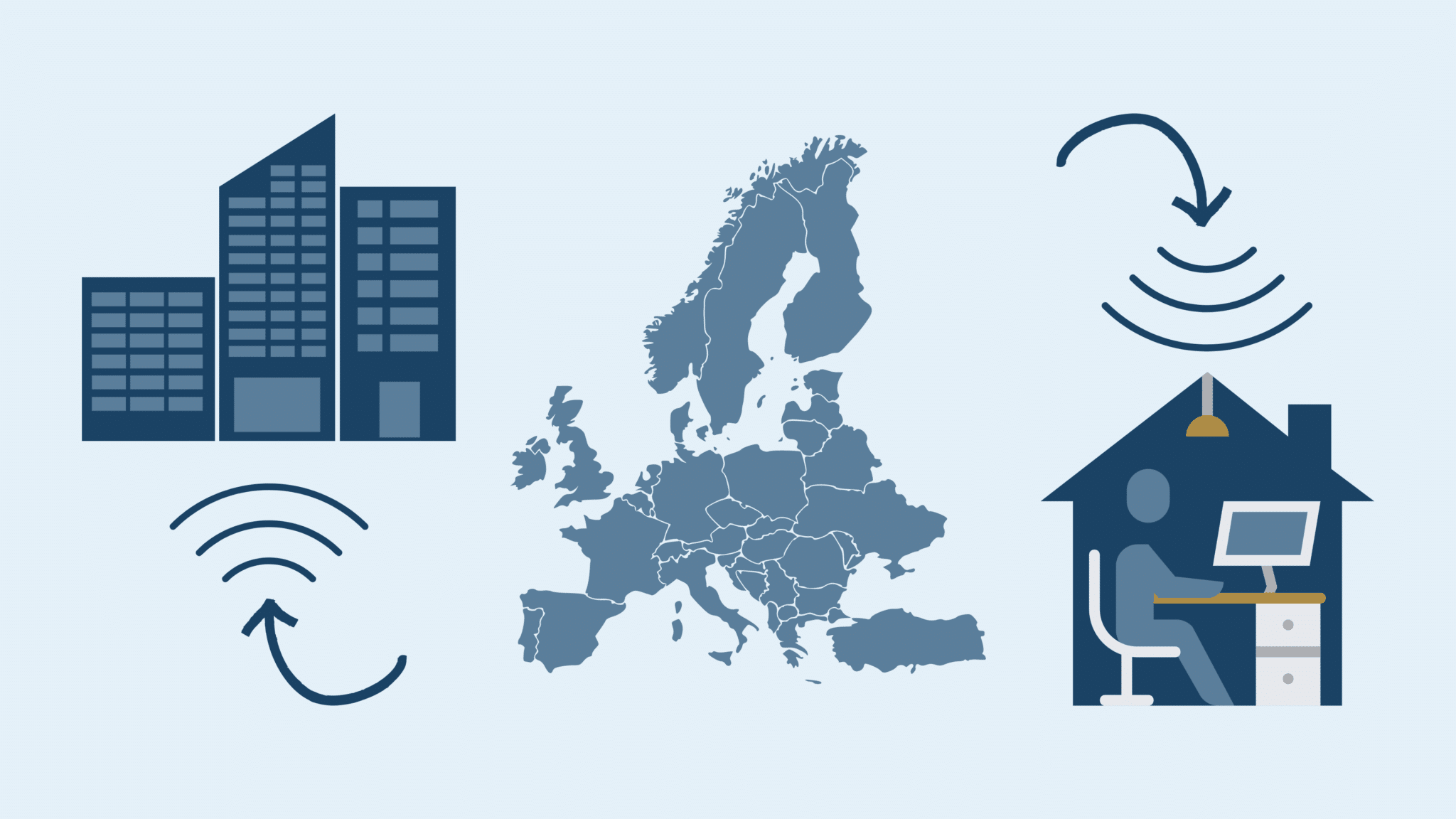
When the Covid-19 pandemic happened we had to find new, flexible ways of working safely. One of the solutions was to work from home – luckily this is possible with telework.
The main characteristic of telework is that the employee or self-employed person can carry out their work activity from any location, making it completely location-independent. This distinguishes telework from all other activities that require or imply the work activity to be carried out at a certain place.
The member states of the European Union, Norway, Iceland, Liechtenstein, Switzerland, and the U.K. have been invited to sign a new framework agreement for social security.
The Framework Agreement concerns the application of Article 16 (1) of Regulation (EC) No. 883/2004 in cases of habitual cross-border telework, and is to enter into force on July 1st 2023 for the countries that have signed it.
If a country signs the Framework Agreement after 1 July 2023, the Agreement will be in effect for that country from the time of signing and, therefore; will not apply retroactively.
What does it mean?
Given that an employee resides in one country, and that their employer has their statutory seat in another country, which has signed the agreement, the employee can work up to 50% of the time in their country of residence while still being covered by the social security in the country of the employer.
The long version
The framework agreement for habitual telework applies when:
The employee has one or more employers with a registered office in the same member state;
The employee habitually works in the member state of the registered office of the employer and teleworks in the residence state
The employee’s teleworking time is less than 50% of their total working time.
A request must be submitted in the member state where the employer has its statutory seat in order for the framework agreement to apply. Requests can only be filed for future periods, and will not take affect retroactively.
Have social security contributions already been paid in the state where the employer has its statutory seat, however; the framework agreement provides an exception to the pro futuro requirement. A request may be filed for a past period if the period isn’t longer than three months, or a request can be submitted for a past period up to 12 months for the period from 1 July 2023 to 30 June 2024, specifically; but it may not include a period before the framework agreement takes effect.
Want to be sure?
Talk with one of our experts to clarify
how this will impact your business and employees
The Framework Agreement covers all persons to whom Article 16 (1) of the Basic Regulation can be applied, provided that their residence is in a signatory State and the registered office or place of business of the undertaking or employer is situated in one other signatory State.
The agreement covers persons to whom the legislation of the State of residence would be applicable as a result of habitual cross-border telework in application of Article 13 (1) (a) of the Basic Regulation in conjunction with Article 14 (8) and 14 (10) of the Implementing Regulation and who are employed by one or more undertakings or employers, which have their registered office or place of business (statutory seat) in only one other signatory State.
The Agreement does not cover people who habitually pursue an activity other than cross-border telework in the State of residence and/or habitually pursue an activity in a state other than those mentioned above and/or are self-employed.
Signed Countries
Please note that Denmark has not signed the agreement.
Framework application examples
The Agreement applies:
Jakob is teleworking from his residence in Italy for 40% of his working time, and spending 60% of his working time in Denmark, the statutory seat of his employer. Provided that both Italy and Denmark are signatory States, the application of this framework agreement can be requested, resulting in the application of Danish legislation.
THE AGREEMENT does not apply:
Francis is teleworking from his residence in Belgium 40% of his working time, and working the remaining 60% of his time in Denmark at the premises (branch) of his employer, which has its statutory seat in Germany. As Francis works outside of the signatory State where the statutory seat of his employer is situated, the framework agreement does not apply.




 ® – 2024. All rights reserved. Crossbord